
Last updated: August 2026
Getting your affairs in order means gathering your legal documents, financial accounts, and health care wishes into one place so your family can find them if you become incapacitated or pass away. In Florida, this checklist includes a will, a durable power of attorney, a health care surrogate designation, and a record of your accounts and property.
What Does “Getting Your Affairs in Order” Mean?
Getting your affairs in order means organizing the legal, financial, and medical information your family would need if you couldn’t manage things yourself, whether from illness, injury, or death. It isn’t one form you fill out once. It’s a collection of documents, account details, and personal wishes, gathered somewhere your loved ones can actually find them.
Most people put this off because it feels tied to getting older or getting sick. In reality, adults of any age benefit from having these documents in place. An accident, a sudden diagnosis, or a hospital stay can leave anyone unable to speak for themselves for a period of time, regardless of age.
Carol L. Grant, P.A. works with Pembroke Pines families building these plans from scratch and with families updating documents that no longer reflect their wishes.
Why Getting Your Affairs in Order Matters
Getting your affairs in order matters because it spares your family from guessing at your wishes during an already difficult time, whether that’s a sudden medical crisis or a death in the family. Without organized documents, even simple decisions, like who can access your bank account or speak with your doctor, can turn into a legal problem instead of a quick phone call.
In many situations, Florida law doesn’t automatically let a spouse or adult child step in and manage your finances or medical care just because they’re family. Without a signed power of attorney or health care surrogate designation, they may need to petition a court for guardianship to gain that authority, a process that costs time and money your family could otherwise avoid.
The same is true after death. If you die without a will, Florida distributes your estate under the state’s intestacy laws, not according to your personal wishes. Families across Pembroke Pines, Broward County, and Miami-Dade County contact Carol L. Grant, P.A. after a loved one’s death specifically because no plan was in place, and the process becomes harder than it needed to be.
The Core Legal Documents Your Checklist Should Include
Four documents form the foundation of most Florida affairs-in-order checklists: a last will and testament, a durable power of attorney, a health care surrogate designation, and a living will. Each one covers a different kind of decision, and together they cover both your finances and your health care.
| Document | What It Covers | Who It Protects |
| Last Will and Testament | Directs how your property, money, and other assets are distributed after death | Your family and beneficiaries |
| Durable Power of Attorney | Names someone to manage your finances and legal affairs if you’re unable to | You, while you’re still alive |
| Health Care Surrogate Designation | Names someone to make medical decisions for you if you can’t communicate them | You, during a medical crisis |
| Living Will | States your own wishes for end-of-life medical treatment, in writing | You and your family, if a decision must be made |
Florida law formally calls this role a “health care surrogate” under Florida Statutes Chapter 765, though people often use “medical power of attorney” informally to mean the same thing . A durable power of attorney must be signed by you and two witnesses and acknowledged before a notary under Florida Statutes §709.2105.
Florida no longer allows “springing” powers of attorney that wait to take effect until you become incapacitated, a rule in place for documents signed on or after October 1, 2011 . Under current Florida law, a durable power of attorney takes effect as soon as you sign it, so choose your agent carefully.
A last will and testament requires two witnesses under Florida Statutes §732.502, and a health care surrogate designation requires two witnesses, at least one of whom can’t be your spouse or a blood relative, under §765.202 .
A last will and testament and a set of advance directives, including a living will, round out the core documents most Florida households need before anything else on this checklist matters.
Your Getting Affairs in Order Checklist
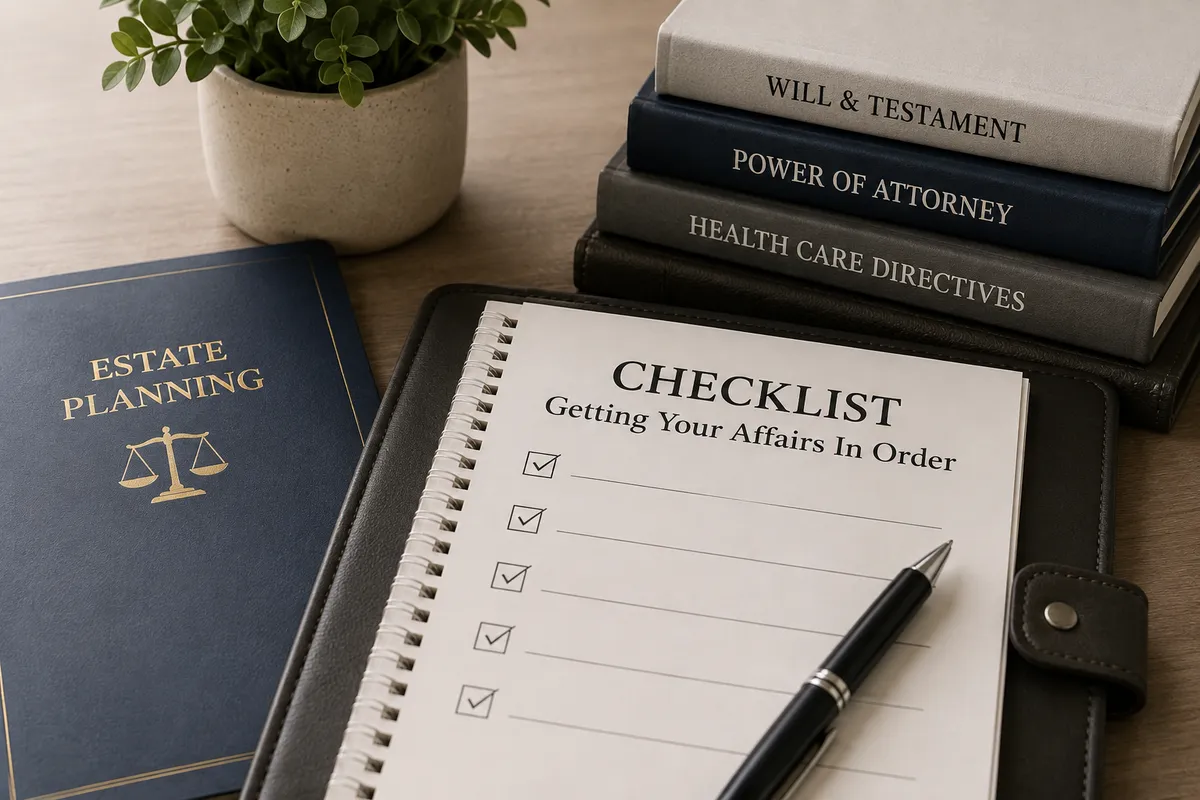
A complete affairs-in-order checklist covers five categories: legal documents, financial accounts, health care information, personal papers, and instructions for the people you trust.
Legal Documents
- Last will and testament
- Durable power of attorney
- Health care surrogate designation and living will
- HIPAA authorization, often included within your health care surrogate or power of attorney documents, so your named contacts can get medical information
- Preneed guardian designation, which lets you name in advance who should serve as your guardian if one is ever needed
Financial Accounts and Records
- List of bank, investment, and retirement accounts
- Insurance policies (life, health, home, auto) with agent names and phone numbers
- Most recent income tax return
- Mortgage, loan, and other debt information
- Property deeds and vehicle titles
Health Care Information
- Primary care doctor and specialists, with contact information
- Current medications, dosages, and allergies
- Health insurance and Medicare information
- Copies of your advance directives, kept with your medical file
Personal Papers
- Birth certificate, marriage certificate, and Social Security card
- List of digital accounts (email, banking, social media) and how to access them
- Location of a safe deposit box or home safe
Who to Tell
Name at least one person you trust and tell them where to find everything on this list. Give copies of your power of attorney and health care surrogate designation directly to the people named in them, not just to the person keeping your files.
How to Organize and Store Your Affairs in Order Checklist
The safest way to store your affairs-in-order documents is a fireproof, waterproof safe or a secure digital vault, with the location shared with at least one trusted person. A printable worksheet can help you gather the information, but the worksheet itself isn’t a legal document.
Carol L. Grant, P.A. offers estate planning resources to help Pembroke Pines area families start organizing their information before a consultation. A short estate planning assessment can also help you see which documents you’re missing.
When to Update Your Getting Affairs in Order Checklist
Review your affairs-in-order checklist at least once a year and after any major life event. Marriage, divorce, a new child or grandchild, a move to a new state, or a serious health diagnosis are all reasons to pull your documents back out and check that they still reflect your wishes.
An outdated power of attorney or an ex-spouse still listed as your health care surrogate can create real problems for your family later. A yearly check keeps small updates from turning into bigger ones.
How an Estate Planning Attorney in Pembroke Pines Helps You Get Your Affairs in Order
An estate planning attorney turns your checklist into legally binding documents that meet Florida’s requirements, and reviews any paperwork you already have for gaps that could leave your family without authority to act. A checklist alone doesn’t protect your family if the underlying documents were never properly signed or witnessed.
Carol L. Grant, P.A. serves clients in Pembroke Pines and throughout Broward, Miami-Dade, and Palm Beach counties, building estate plans that match each family’s actual situation rather than a generic template. Book a call or call (954) 404-8274 to talk through your checklist and find out what’s still missing.
Key Takeaways
- Getting your affairs in order means organizing legal, financial, and health care information in one place, not filling out a single form.
- Florida’s core affairs-in-order documents are a will, a durable power of attorney, a health care surrogate designation, and a living will.
- Florida law calls a medical decision-maker a “health care surrogate,” not a “medical power of attorney.”
- Review your checklist at least once a year and after major life events like marriage, divorce, or a new diagnosis.
- Without a will, Florida distributes an estate under state intestacy law rather than personal wishes.
- Carol L. Grant, P.A. serves Pembroke Pines, Broward County, Miami-Dade County, and Palm Beach County families building or updating their affairs-in-order plans.
Frequently Asked Questions
How do I get my affairs in order before I die?
Start with a will, a durable power of attorney, and a health care surrogate designation, then gather your financial account information and store everything where a trusted person can find it. From there, add your health care information, personal papers, and a list of digital accounts. Talk with an estate planning attorney to confirm your documents meet Florida’s signing and witnessing requirements, since a document filled out incorrectly can be unenforceable when your family needs it.
What’s the difference between a living will and a health care surrogate designation in Florida?
A living will states your own wishes for end-of-life medical treatment in writing, while a health care surrogate designation names a specific person to make medical decisions for you if you can’t communicate them yourself. Most Florida estate plans include both, since a living will covers your general wishes and a surrogate designation gives someone the authority to act on decisions your living will doesn’t address.
How often should I review my affairs in order checklist?
Review your checklist at least once a year and immediately after any major life change, including marriage, divorce, the birth of a child or grandchild, a move, or a serious health diagnosis. Documents that were accurate five years ago may no longer reflect who you’d want managing your finances or making medical decisions today.
Is there a printable worksheet for getting my affairs in order?
A printable worksheet can help you organize your account numbers, contacts, and document locations, but it doesn’t replace legally binding documents like a will or power of attorney. Carol L. Grant, P.A.’s estate planning resources page offers tools to help Pembroke Pines area families gather this information before meeting with an attorney to put the legal documents themselves in place.
Do I need a lawyer to get my affairs in order in Florida?
You don’t need a lawyer to list your accounts and locate your paperwork, but Florida requires specific signing and witnessing formalities for a will, durable power of attorney, and health care surrogate designation to be legally valid, including two witnesses and, for a power of attorney, notarization. A document that skips these formalities can be challenged or rejected exactly when your family needs it to work, so most people have an attorney prepare or review the legal documents on this checklist.